Stamped Concrete Help for Homeowners
Request a stamped concrete estimate
Stamped concrete is poured flatwork pressed with patterns so it looks like stone, brick or wood. It costs less than most natural materials and suits patios, walkways, pool decks and entries. This page covers new stamped work only.
Enoughpain Concrete is a referral service. It introduces homeowners in West Sacramento and the West Sacramento area to independent local providers. The providers do the work. You compare written estimates side by side, ask your questions and decide with no obligation. Older homes get extra attention, because an old slab, past repairs and buried surprises can change the plan before any pattern is chosen. Costs vary by job, so ask each provider for a written quote that lists the full scope.
Is Stamped Concrete the Right Fit?
Stamped concrete is a poured slab with a pattern pressed into the surface while it is still soft. Color is added, and a sealer finishes the job. It suits patios, walkways and entries especially well. This page covers new work only.
Start With the Ground, Not the Pattern
The base decides how the finished surface ages. A provider removes old material, grades for drainage, compacts the soil and sets forms. Skipping this step is the usual cause of cracking later. Ask each provider to describe their base prep in writing.
Old Slab, New Plan
Older houses add questions. A bungalow or a 1950s-1980s tract home may have an aging slab, buried lines or patches from past work. A provider may need to demolish first rather than pour over it.
Some providers offer thin stamped overlays on sound slabs. Others will not. Compare both approaches in your estimates.
When Settling Shows Up
Sloped slabs and wide cracks near the house can point to a soil or foundation problem. Foundation repair experts should assess that before any new flatwork goes in. Stamping over a moving slab wastes money.
How the Pattern Is Pressed In
The provider pours the concrete and levels it. A release agent keeps the mats from sticking. Rubber mats are then pressed across the surface in sequence, and tools finish the edges and corners. Timing matters. Press too early and the surface smears. Press too late and the pattern stays shallow.
Why Joints Are Cut
Concrete shrinks as it cures. Control joints give cracks a planned place to form. A good provider hides them along pattern lines.
Popular Patterns and Colors
Common patterns include:
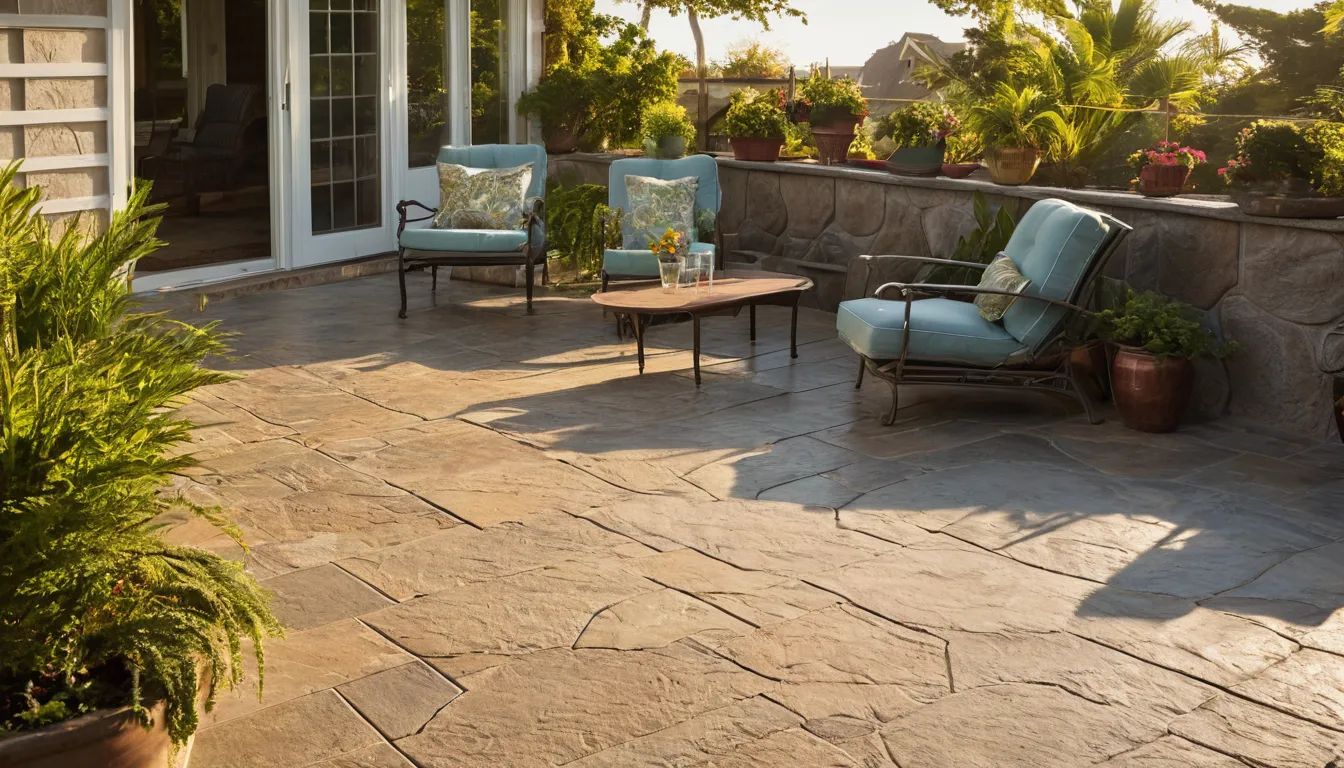
- Ashlar slate, a clean, blocky stone look
- Random stone, a more natural, irregular layout
- Brick herringbone, a classic and tidy option
- Wood plank, popular around pools
Color can be mixed into the concrete or applied on the surface. A second, darker tone called antique release adds depth in the grooves. Ask to see a sample board, and view it outdoors in daylight.
Where Stamped Concrete Works Well
Stamped concrete suits patios, pool decks, walkways, front entries and garden paths. It pairs well with stucco ranch homes, where a stone or brick texture adds contrast. Textured finishes also give better grip than a smooth surface when wet.
Local Weather Matters
Long dry seasons speed up curing, so providers often pour early in the day and protect the surface from drying too fast. Winter rain events can delay a pour or sealing. Smoke seasons leave ash that settles on the surface, so plan a gentle rinse. Mild coastal temperatures mean freeze damage is rarely a concern.
Stamped Concrete vs. Pavers
Pavers are individual units set on sand. A single paver can be lifted and replaced, and that is a real advantage. Stamped concrete is one continuous surface with fewer gaps for weeds. It usually costs less to install, but a crack cannot be swapped out like a paver.
If you cannot decide, ask for a written estimate on both. Then compare.
How Long the Job Takes
Timelines vary by size, weather and site access. A typical sequence looks like this:
- Demolition and base prep: one to three days
- Forming, pour and stamping: usually one day
- Curing before sealing: often about a week
- Foot traffic: after a day or two
- Furniture: after several days
- Vehicles: after the provider's stated cure time
Request a callback to check provider availability in your area.
Caring for Stamped Concrete
Sealer protects color and blocks stains. Most surfaces need resealing every two to three years. Sweep regularly, rinse with a hose and use mild cleaners. Skip harsh acids and metal shovels.
Cracks and Realistic Expectations
Any concrete can crack. Joints, a solid base and proper curing lower the odds. If you need concrete driveway repair on an existing slab, that is a different request. This service is about planning new work.
Choosing a Stamped Concrete Provider
Stamping is a skill. Look for real examples of finished work and a clear scope. Check that the provider holds any license your state requires, and ask about insurance. Confirm details directly with each provider.
What Belongs in a Written Estimate
- Square footage and demolition scope
- Base depth and material
- Concrete thickness and reinforcement
- Pattern, color and sealer
- Joint layout
- Start window and payment schedule
Compare Before You Commit
Line the estimates up next to each other. A low number with a thin scope can cost more later. Pick the provider whose plan makes sense to you. Written estimates first. No pressure.
What's Included
Pattern Selection
Providers show stone, brick and plank patterns so you can match your home's style.
Base and Slab Prep
Grading, compacted base and forms are scoped in writing before any concrete is poured.
Color and Sealing
Integral or surface color plus a protective sealer to guard against stains and wear.
Old Slab Review
Providers check existing concrete for settling, patches and hidden issues before recommending a plan.
Typical Stamped Concrete Costs
These are typical U.S. ranges. Real prices vary by site, access, pattern and region. Treat them as a starting point, and get a written quote from each provider.
| Item | Typical range | Notes |
|---|---|---|
| Stamped concrete, new | $12 – $25 per sq ft | Pattern and color affect price |
| Plain concrete slab | $6 – $12 per sq ft | Useful for comparison |
| Demolition and haul-off | $2 – $6 per sq ft | Needed on many older homes |
| Base prep and grading | $1 – $4 per sq ft | Depends on soil and drainage |
| Sealer and first coat | $1 – $3 per sq ft | Resealing repeats every few years |
| Stamped overlay on sound slab | $8 – $18 per sq ft | Not suitable for every slab |
How It Works
Send Your Request
Share your project size, home age and the look you want through the estimate form.
Meet Local Providers
Independent providers in our network review your details and may arrange a site visit.
Compare Written Estimates
Line up scope, materials, timing and price from each provider in the same format.
Decide at Your Pace
Choose a provider, or none at all. There is no obligation.
Why Call Enoughpain Concrete
Compare, Then Decide
Review written estimates side by side with no obligation to choose any provider.
Independent Providers
Local providers do the work, so you can compare scopes and approaches.
Older-Home Focus
Aging slabs and past repairs get flagged early, before the plan is set.
Plain Process
Short steps and clear terms, with no sales pressure along the way.
Other Services
Need stamped concrete help in West Sacramento?
Request an estimate for a new driveway, patio or stamped finish. A provider in our network will review it. There is no obligation.
No obligationStamped Concrete Help FAQ
How much does stamped concrete cost per square foot?
Typical U.S. prices run roughly $12 to $25 per square foot for new stamped work. Pattern, color, site access and demolition change the total, so request written quotes from several providers.
Can stamped concrete go over my old patio?
Sometimes. If the old slab is sound, a provider may apply a thin stamped overlay. If it is cracked, settled or uneven, replacement is usually the better route. Providers can assess it on site and explain their reasoning in the estimate.
How often does stamped concrete need to be resealed?
Most sealers need a fresh coat about every two to three years, depending on sun, foot traffic and weather. Ask your provider which sealer they use and what maintenance schedule they recommend.
Tell us what happened
Request an estimate for a new driveway, patio or stamped finish. A provider in our network will review it. There is no obligation.
No obligation